

Zhengzhou Shuliy Machinery Co., Ltd. was established in 2011 and is located in Zhengzhou City, Henan Province, China. Shuliy Machinery mainly produces biomass charcoal making machine production lines, plastic recycling machinery, food processing machinery, agricultural machinery and metal baler machinery and so on. Years of technology accumulation and product innovation have enabled our company to have many domestic and foreign customers and win a good reputation.






Rich Experience
Zhengzhou Shuliy Machinery Co., Ltd. was established in 2011 and is located in Zhengzhou City, Henan Province, China.Shuliy Group has more than 12 years of experience in machinery product manufacturing and foreign trade export, and has rich experience in machinery industry manufacturing and after-sales service.
Product Application
Our company's products cover most industries, charcoal machine is suitable for the charcoal manufacturing industry, the recycling machine is suitable for the environmental protection recycling industry, the food machine is suitable for the food processing industry, and agricultural machinery is suitable for the agricultural processing industry.
Professional Certification
We have passed the ISO9001 quality management system certification, which shows that we follow international standards in product design, production, sales, and after-sales service. At the same time, most of our products have CE certificates, and our company has also passed the certification of the TUV testing agency. In addition, we have obtained import and export rights, and have the ability to export high-quality mechanical products to the whole world.
Advanced Equipment
Our production line adopts automation and intelligent technology, including CNC machine tools, machining centers, laser cutting equipment, precision measuring instruments, etc. This advanced equipment not only improves the manufacturing precision and quality of products but also can meet the specific needs of different customers.
Introduction of Packing Machine
Packaging machines are used to package products or components. This product area includes equipment that forms, fills, seals, wraps, cleans, and packages at different levels of automation. Packaging machines also include related machinery for sorting, counting, and accumulating. There are many different package types. Closing methods for packaging machinery can use caps and lids, cork, glue, heat seals, nails or staples, tamper-evident or tamper-resistant tape, tuck and fold techniques, and wrapping paper.
Pre-Made Pouch Bagging Machines
These machines take the ready-to-go pouches, open them up, fill them, and seal them — using either a zipper or non-zipper system. Ideal for food products, pet foods, pharmaceuticals, and other consumer goods, they guarantee an airtight seal. The pros of using a food packaging machine like this include product versatility, speed, efficiency, high-quality pouch designs, and locked-in freshness. Unsurprisingly, pre-made pouches are the packaging of choice for coffee, spices, pet food, and dried fruits.
Horizontal Form, Fill, and Seal (HFFS)
HFFS machines create, fill, and seal packages from a single roll of packaging material. They are ideal for products requiring horizontal packaging, like bars, candies, and baked goods.The benefits of these machines include high-speed packaging, flexibility, and reduced material waste due to the continuous packaging process. However, they may be less suitable for packaging products with irregular shapes or requiring vertical positioning.
Vertical Form, Fill, and Seal (VFFS)
VFFS machines function similarly to HFFS machines but create packages vertically, making them perfect for packaging products like chips, nuts, powders, and granules. Pros of an automatic packing machine include their high-speed operation, versatility in handling various packaging materials, and adaptability for different product types. However, it is important to note that they may not be suitable for packaging large, bulky, or fragile products.
Flow Wrapping
These machines wrap a continuous plastic film around a product, often using heat sealing to lock in the air, creating a pillow-like final package. Candies, snack foods, and baked goods commonly rely on them for their speed and cost efficiency. However, it's not suitable for products requiring rigid or protective packaging.
Shrink Wrapping
It involves wrapping a product(s) in a heat-sensitive plastic film that shrinks when heated. The result is a tamper-evident protective seal that protects an item or bundles multiple products together. Cost-effective, versatility, and a high-quality finish make it popular among packaging machine manufacturers. From water bottles to cosmetics, shrink wrapping is the preferred method of choice — although it doesn't alter the structural support of alternative packaging methods.
Tray Sealers
Meat, fish, and ready meals require packaging that showcases the product and prevents outside contamination. Enter tray sealers — the product is placed in a plastic or polystyrene tray and sealed with a lid or film. Nothing creates a protective, airtight environment cheaper and more effective than tray sealing. However, the process struggles with irregular shapes or products requiring additional support.
Palletizers
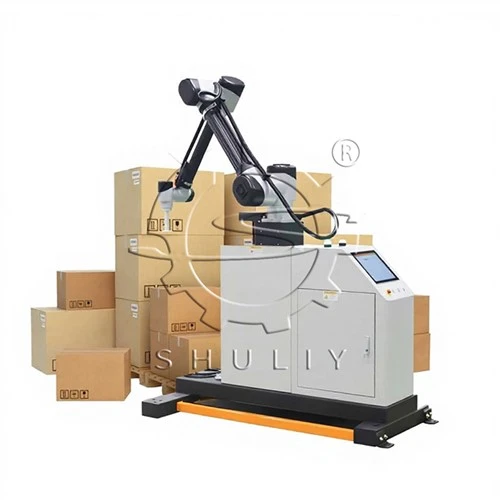
They are automated packaging machines that stack products onto pallets for easy transportation and storage. They are used across various industries to improve warehouse efficiency and reduce labor costs. Pros of using palletizers include increased productivity, reduced risk of injury, and the ability to handle various package sizes and weights. The main drawback businesses may face is the initial investment cost, which may be high when choosing the right palletizers.
Cartoners
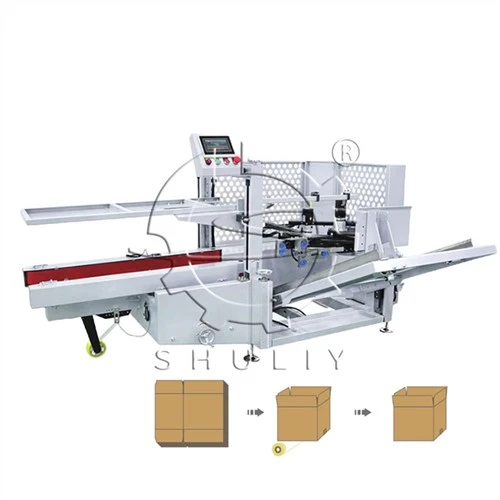
These machines are commonly used for liquid or semi-solid food products. These form, fill, and seal machines work effectively and efficiently, producing a sturdy, stackable result ready for the shop shelf. They even range widely in size and style, suitable for everything from food products to consumer goods.
Stick Pack Packaging Machines
This packaging machinery produces slender, tube-like packages ideal for single-serve products such as coffee, sugar, or pharmaceutical powders. These are commonly found in hotels, restaurants, and other public locations. Stick packs are as compact as they are convenient — capable of being stored in boxes for easy transport. Plus, minimal material usage lowers cost, even if the process isn't suitable for anything other than liquid or granular products.
Thermoformer
Unlike any other packaging method — thermoformers take a plastic sheet and, using a mold, mass-produce a custom-shaped container. Food, medical devices, and consumer products can all be stored inside. Indeed, due to the bespoke nature of the mold, thermoforming is highly adaptable to unusual product shapes and sizes.
Increased Productivity and Efficiency
A packaging machine can drastically improve the efficiency of your warehouse operations. With a packaging machine in place, employees can quickly and accurately pack products boxes, and packages can be prepared for shipment faster than ever before. This increase in productivity and efficiency can save your business time and money in the long run.
Better Labelling
With a packaging machine, it's easy to label packages accurately and quickly. Labels can be applied much faster than when done manually, allowing you to save time and costs associated with incorrect labels. Furthermore, as most machines are able to print barcodes and other information on the labels, this adds another dimension of accuracy to your warehouse operations.
Improved Product Quality Control
Packaging machines help reduce the instances of human error and confirms accuracy in product packaging. With them, you can program multiple criteria that packages must meet before they are labelled for shipment. This means improved quality control throughout your warehouse, resulting in fewer customer complaints. Additionally, it's possible to create a customized packaging process with a packaging machine - reducing time and costs associated with manual processes.
Cost Savings on Packaging Materials
With a packaging machine, businesses can use less packaging materials such as air-filled void-bags or sheets to protect products. Less filler will cut the cost incurred just by packaging materials. Additionally, the machine itself is easy to maintain and has a longer lasting life cycle than manual processes, thus saving time and money in the long run.
Easier Compliance with Shipping Regulations
Having a packaging machine in the warehouse can help ensure that you're always following legal and industry regulations regarding shipping. As shipments needs to be prepared with the correct packaging, size and weight, a packaging machine can provide precise measurements to ensure accuracy. The machine is also able to add in important information like barcodes quickly, which otherwise take a long time manually - saving you time and frustration.
What Should be Considered When Choose Packing Machine
Type of Material
Start by defining the type of material you need to handle. Each product has its characteristics and reacts differently to packing. This information can be very useful in deciding whether you need a vertical, horizontal or other type of packaging machine.
Type of Packaging
The type of the packaging machine will be defined by whether you are going to use ready-made bags or flat film. Flat film is an economical packaging material for a long production of one bag size. However, the packaging machine's ready-made bags are more easily and quickly changed for the different assortments than the flat film of the packaging machine. If you plan to produce more than one bale size, look for a packaging machine with simple and easy packing size adjustments. Some packaging machines have easier changeovers than others, and some, like horizontal packaging machines, can only handle a single packaging size.
Production Capacity
Think about what you want to achieve in terms of production rate. Though the production rate varies from one type of packaging machine to the next, the nature of the material and the package size are what will mostly influence the result. Bigger packaging sizes will require more cycle time, thus resulting in a lower production rate, no matter the type of packaging machine.
Machine Sturdiness
Depending on the handled material and the working conditions in the plant (very dusty environment, low temperatures, long production hours), you may need heavy-duty equipment. Make sure the packaging machine is designed and manufactured for your type of material and environment.
Safety for the Operator
Operator safety is of course a priority, so it's important to have an idea of the safety devices included in the equipment. Some suppliers give more importance to this aspect than others. Look for machines equipped with safety fences, interlocked doors and movement detection devices that stop the machine when access to a danger zone is required. Injuries can be very costly for a company, so safe equipment can help to minimize these costs.
Available Space
Evaluating the available space in your plant is essential when choosing your baler. Horizontal packaging machines will tend to have a bigger footprint, while vertical packaging machines will require more space in terms of height.
Budget
Needless to say, thinking about your budget is primordial. While it may seem like a huge investment, getting a new equipment may increase your productivity and bring you better results with less maintenance. Calculating your ROI is important to know how long your investment will pay off.
After-Sales Service and Local Support
Look for a supplier that will be able to build a long-term relationship with you and that has offices or a support team in your local area. It can be a game changer when you need technical service or spare parts quickly. Choose a supplier that is always trying to get new technology that could help you update your equipment by retrofitting without having to buy a new one if not necessary.
Supplier's Experience
Get information about the experience of the supplier you're looking for. Choosing a supplier who has had other customers, handling the similar products, as you, might be judicious.
Maintain a Preventative Maintenance Schedule
Read the manual. The manual will tell you what kind of maintenance your machine requires, how often maintenance should be performed, and will also tell you about any wear-and-tear parts that will need to be replaced regularly. Remember to keep your machine calibrated. Again, exactly what kind of calibration is needed will depend on the machine. Common parts requiring calibration include cutters, perforators, bag carriers, and winding and unwinding reels. With continuous use, these parts will slowly work their way out of alignment, so regular calibration is necessary. Don't neglect hydraulics. As hydraulic fluid continually compresses and decompresses inside a tube or piston, it slowly breaks down on the molecular level. Over the course of several months, this causes the fluid to lose its strength, so a piston that's supposed to have 5,000 pounds of force may only be putting out 3,500 pounds. Hydraulic fluid is a bit spendy, but it's a lot cheaper than an unplanned production delay.
Know Your Spare Parts List
We've already talked about the need to replace wear-and-tear parts like blades. This is easy to do if you've got the parts already on hand, but it can be a nightmare if you wait until your blade is dull to place an order. The best course of action is to keep a small selection of frequently-used parts. This is an area where it is important to have a close working relationship with your maintenance supervisor. Once they've worked with a machine for a bit, they will have a good handle on what parts need frequent replacement. Ensure that they have the authority and budget to keep a good stock of replacement parts, and your machines will run smoother and last longer.
Prepare for Obsolescence and Upgrades
For example, suppose you want to add a spout insertion system. You can do that easily. There are also attachments for perforating rolls of packaging while they're on the reel and web-based apps for more precise control over your machine. These tools can extend your machine's life well beyond what it would have been, by allowing you to package your products faster and scale up your production. Of course, even the best-maintained, most well-engineered machines are going to need replacement eventually. If nothing else, as technology advances, there will be better, faster machines as time goes on.
Autonomous Maintenance
Under an AM regime, machine operators are empowered to perform basic repairs like lubrication, bolt tightening, and cleaning without putting in a call to the maintenance department. Operators are also expected to carry out routine inspections to identify potential issues. AM helps your machines last longer, but it also puts a lot of extra responsibilities on your machine operators. Because of this, it's important that your operators have the proper training. This will significantly increase their level of proficiency, so they'll have a better understanding of how to maintain the equipment correctly.
Choose a Reliable OEM Partner That Offers Good Support
With any type of specialized equipment like a packaging machine, the design and engineering will differ from manufacturer to manufacturer, and there aren't a lot of independent experts in the field. To ensure that your maintenance regime is on point, you'll need to choose an OEM partner who offers good support, long after the original purchase.
Zhengzhou Shuliy Machinery Factory has a modern production workshop and sophisticated processing equipment. Our factory is equipped with a professional quality control team and after-sales service personnel to track every order scientifically and provide customers with efficient services.


As one of the most professional packing machine manufacturers and suppliers in China, we're featured by quality products and competitive price. Please rest assured to buy packing machine for sale here from our factory. For customized service, contact us now.
Packing Machine, Charcoal Packaging Machine(0/10)

