




Products Description
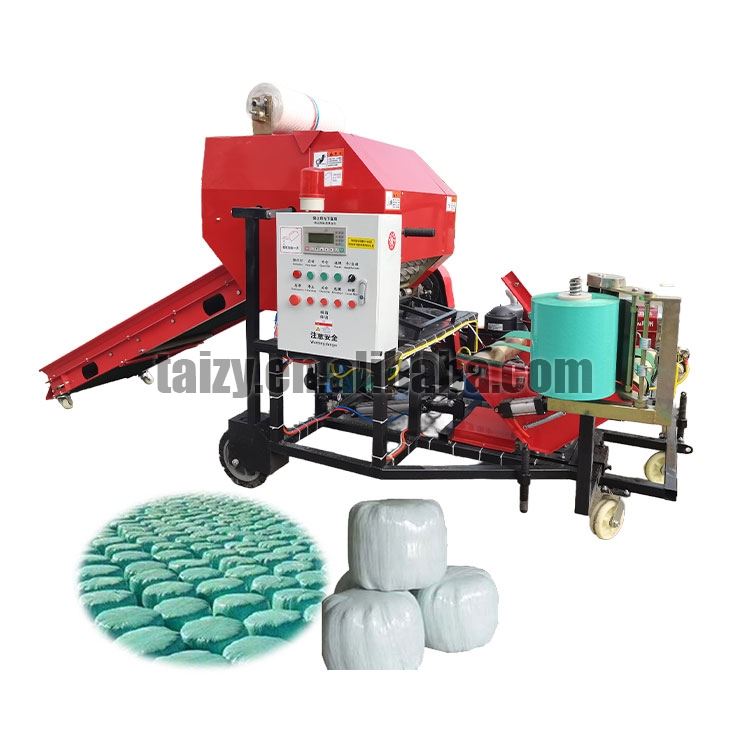
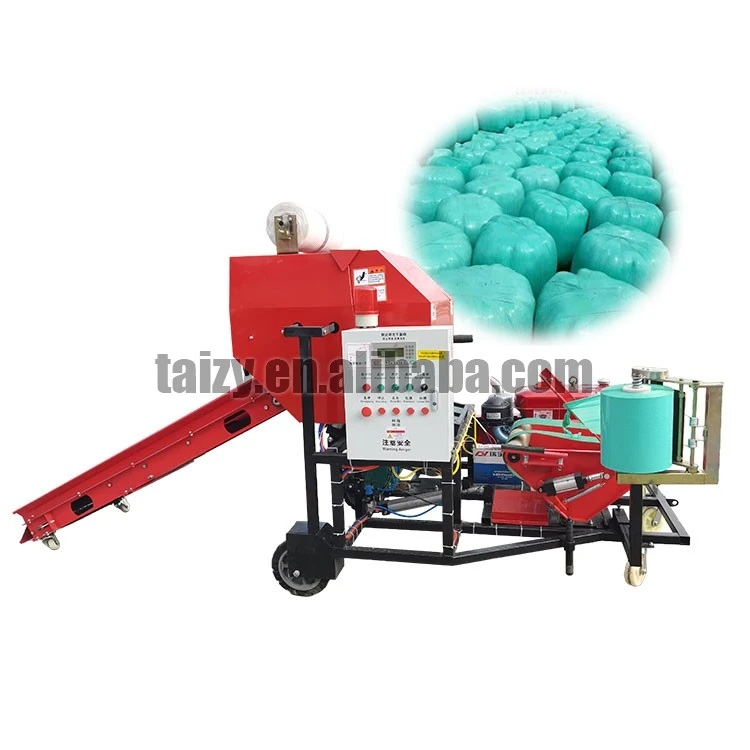
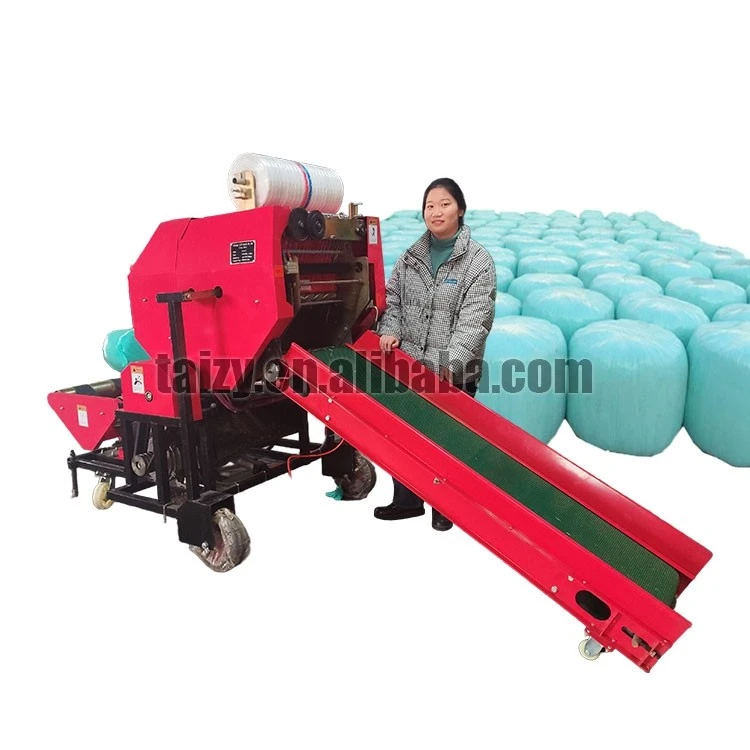
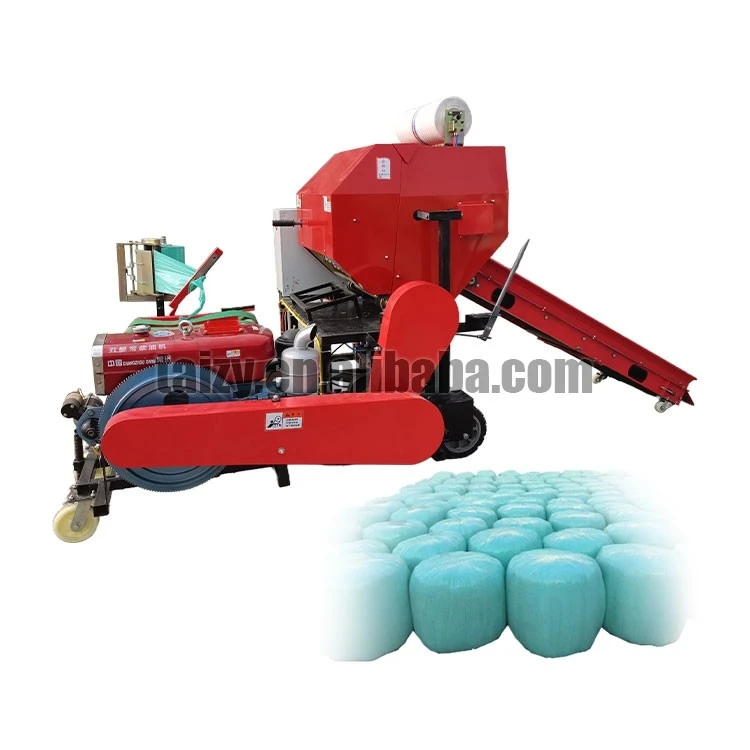
A large hay baler is a highly efficient packaging machine widely used in agriculture and livestock farming. It is specially designed to compress and bale loose materials such as straw, forage grass, and grains, while using film wrapping technology to achieve sealed preservation. Through mechanical compression and airtight film wrapping, the machine effectively reduces material volume, extends storage time, and helps prevent mold growth as well as nutrient loss.

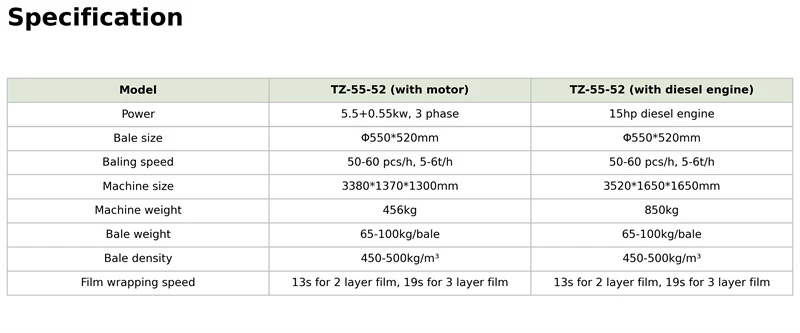
Specification
Working Principle
Working Principle:
• Feeding System:
Materials are fed into the inlet manually or through a conveyor system, where they are pre-compressed by a screw conveyor or hydraulic feeding device.
• Compression and Baling:
The hydraulic cylinder or mechanical pressing system compresses the materials into high-density bales. Common bale sizes are typically 50–60 cm in diameter and 50–120 cm in length.
• Film Wrapping and Sealing:
After baling, the materials are wrapped with 3–6 layers of stretch film (usually PE or PVC) through a rotating platform or automatic film-feeding system, creating an airtight and sealed storage environment.

Application
• Livestock Farming:
Widely used for silage baling to maintain feed freshness and preserve nutritional value.
• Agricultural Waste Processing:
Suitable for baling straw, hay, rice stalks, and other agricultural residues for easier transportation and storage.
• Biomass Energy Industry:
Compresses agricultural and forestry waste materials for use as biomass fuel or further processing raw materials.
Feature
Automation Level:
Fully automatic models can achieve unattended operation with a working efficiency of up to 60–80 bales per hour, while semi-automatic models require manual assistance and generally produce around 30–40 bales per hour.
Power Requirements:
Small-sized machines typically operate with a power range of 5–7.5 kW (380V voltage), while large-scale models may require 15 kW or higher.
Film Wrapping Performance:
High-quality equipment provides smooth and uniform film wrapping without bubbles or wrinkles, with film thickness usually ranging from 20–25 μm.

Tips
Purchasing Considerations:
• Material Characteristics:
Choose the appropriate compression ratio according to the material moisture content (recommended moisture level ≤65%) and fiber length.
• Capacity Matching:
Small farms are recommended to select models with an output of 40–60 bales per hour, while large processing plants should choose equipment capable of producing more than 80 bales per hour.
• Energy Consumption Efficiency:
Compare the power consumption per bale, which is generally around 0.1–0.15 kWh per bale.
• Maintenance Cost:
Check the replacement cycle and cost of wearing parts such as cutting blades and hydraulic sealing components to ensure long-term operating efficiency.

Operation Safety Tips:
1. Do not manually adjust the bale position while the machine is running.
2. Regularly inspect the hydraulic system pressure, with the normal operating range maintained at 10–12 MPa.
3. During the film wrapping process, ensure the film tension is properly adjusted (recommended range: 5–8 N) to prevent film breakage or loose wrapping.

Hot Tags: large hay baler, China large hay baler manufacturers, suppliers, Agricultural Machine, Automatic Fish Feed Pellet Machine


